
History Co-Author Review
Can Claude or ChatGPT Really Help You Write a Narrative History Book?
Every history lover has a story they keep coming back to. Maybe it’s a forgotten frontier war, or a general who made one bad call and lost an army. You’ve probably thought someone should write the book on it. Then reality hits. The research alone could eat a year, and the writing has to keep a stranger turning pages.
That gap, between the story you care about and the book you never write, is exactly where History Co-Author wants to sit. It’s a $17 system that turns Claude or ChatGPT into a research partner and a writing partner for narrative history books. And it lands at a moment when plenty of people have already tried asking AI for history and got back something flat, vague, or simply wrong.
So in this History Co-Author review, I’m going to dig into all of it. I’ll cover what the product is, who built it, what you get for the money, how the workflow actually runs, what each OTO costs, and whether it’s legit and worth it. I’ll also be careful to separate what the seller claims from what the product plainly includes. With history, that difference is everything.
Overview Of History Co-Author
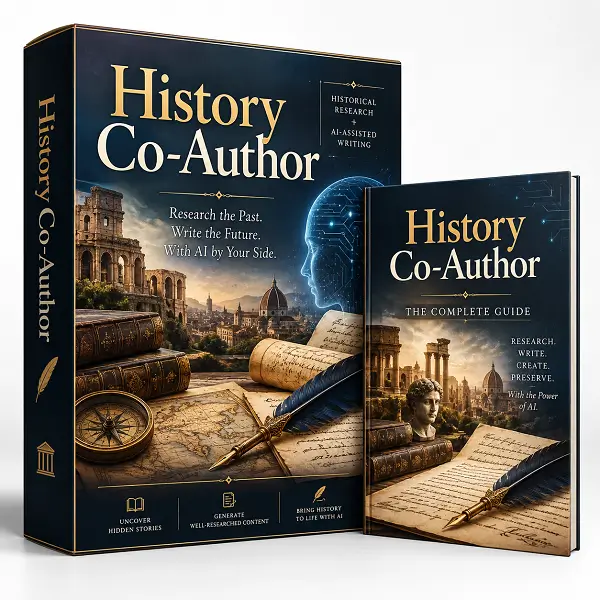
Here’s the short version before we go deep. If you only have a minute, this table tells you most of what you need.
| Detail | What the sources say |
|---|---|
| Product name | History Co-Author |
| Creator | Søren Jordansen, known as The Copy Viking |
| Launch date | October 2, 2026 |
| Front-end price | $17, one-time payment (launch-week pricing) |
| Niche | Narrative history books, aimed largely at Amazon KDP |
| Works with | Claude and ChatGPT |
| Plugins | Narrative History Studio for Claude Cowork and ChatGPT Work |
| Training | 29-module written course, screenshot tutorials, video walkthroughs |
| Upsells | Four OTOs, from $47 to $97 each |
| Guarantee | 14-day money-back guarantee |
| Coupon | None stated |
| Vendor bonuses | None stated beyond the plugins being included free |
Two rows matter more than they look. The $17 is a launch price that rises after launch week, to an amount nobody states. And while the product has no subscription, you still need a paid Claude or ChatGPT plan, which the seller says openly.

What Is History Co-Author?
At its core, History Co-Author is a structured set of files, plugins, and training that makes an AI behave like two people at once. One is a careful researcher. The other is a storyteller. Together, they help you produce a narrative history book, meaning true history told with the pull of a novel: real people, real decisions, real consequences, and no lecture.
The sales page leans hard on that two-person picture. On one side of the table sits a history professor. He goes to letters, diaries, and testimony from the time, asks who wrote each source and why, tells you which account he trusts when two disagree, and won’t let you use a quote he can’t trace. On the other side sits a writer who takes everything the professor dug up and drops the reader into the cold, the fear, and the moment of decision. Normally those two never work on the same book. Here, the AI plays both, and both answer to you.
That framing explains the product’s priorities. The AI researches first. It checks what the evidence actually supports, flags conflicting accounts, and marks research gaps. Only then does it write, chapter by chapter, under strict rules about voice and quotation. And once the last chapter is done, it builds the back pages serious history books carry:
- a cast of characters
- a note on names
- a note on sources
- chapter notes for every chapter
- a selected bibliography
Just as important is what it isn’t. The seller says it’s not software you point at a task and walk away from. You make the creative calls, and the AI brings the research, the structure, and the stamina to hold a voice across a long book.
Who Brought To You?

History Co-Author comes from Søren Jordansen, who goes by The Copy Viking.
His background, according to the product information, is more than 20 years in copywriting and direct-response marketing. Over the last stretch, he’s been building AI-assisted writing and publishing systems for long-form books rather than quick one-shot prompts. History Co-Author also isn’t his first product in this line. The sales page refers to earlier fiction systems, Cozy Co-Author and Steamy Co-Author, and explains that members kept asking for nonfiction, with history requested more than anything else.
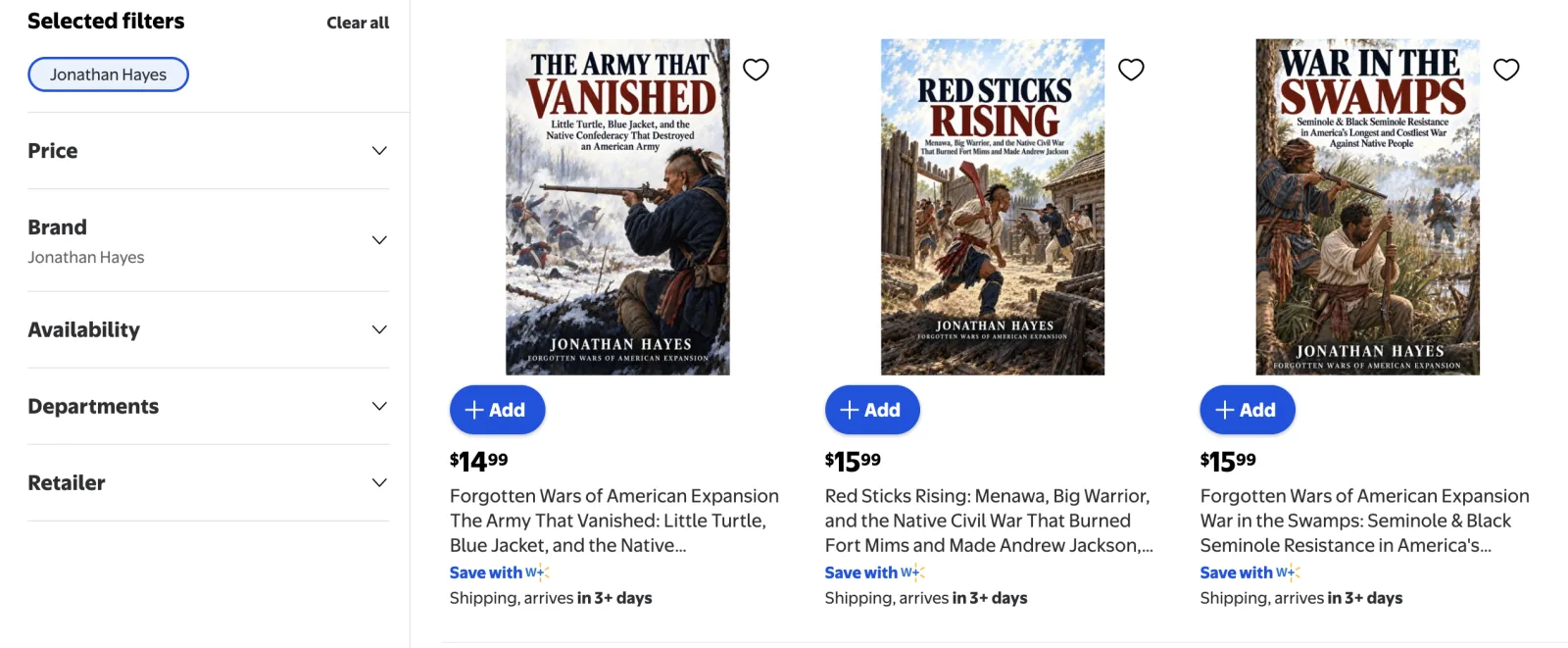
Søren also writes history himself under the pen name Jonathan Hayes. According to the seller, he used this system to research, write, and publish a three-book series, Forgotten Wars of American Expansion, in under fourteen days. He puts that series at 857 pages and more than 250,000 words. The first book, The Army That Vanished, supplies most of the prose samples and back-matter screenshots on the page.
What I found most telling, though, is the story of how the product nearly didn’t happen. Søren says the research side worked almost immediately, but the writing kept coming out like a dry encyclopedia entry. Accurate, careful, and dead. He shows a note dated September 3, one month before launch, saying they might have to abandon the launch and ship another fiction product instead. A few days later, he says, a couple of breakthroughs gave the prose real bite without loosening its grip on the facts. That’s the version he shipped.
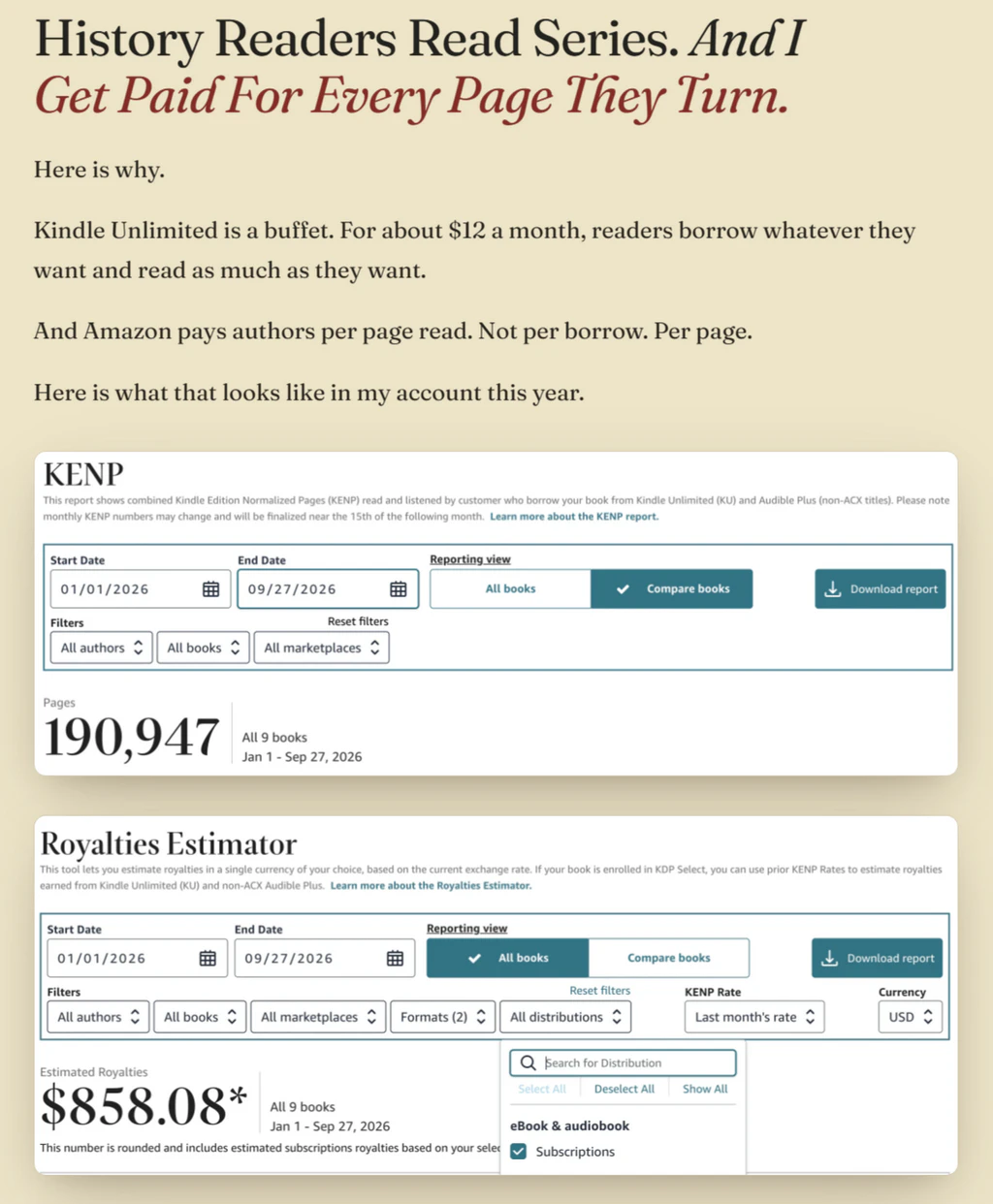
One caution, though. The page also shows Amazon rankings, download counts, and royalty screenshots from Søren’s own account. Those are seller claims I can’t verify, and Søren himself calls his yearly totals not life-changing. They show he uses what he sells, not what you will earn.
What Will You Discover Inside History Co-Author?
Inside the dashboard, everything sits in two groups: The System, which does the work, and The Training, which teaches you to use it and publish the result. The sales page attaches a value to each piece, adding up to $505, though those numbers are the seller’s own estimates.
| Component | Group | Size or format | Seller’s stated value |
|---|---|---|---|
| Narrative History Framework | The System | ~700 lines | $197 |
| Narrative History Style Pack | The System | ~186 lines | $67 |
| The Setup Prompt | The System | ~860 lines, 18 steps | $97 |
| Narrative History Studio | The System | Two plugins | $47 |
| 29-Module Written Course | The Training | Written course | $97 |
| Interactive Screenshot Tutorials | The Training | Click-through guides | Included |
| Video Walkthroughs | The Training | Videos | Included |
Now let’s open each one up.
Narrative History Framework
This is the heart of the product, and the seller says it took four months to build and test. Its roughly 700 lines define how the book should read, chapter after chapter. It contains:
- the felt engine, which keeps consequence driving the story
- three dials controlling pace, scale, and narrator
- the Textbook Test, built to stop chapters from turning into lectures
- record rules that keep every quotation exact
- nine narrator voices to choose from
Because the framework applies to every chapter, the standard doesn’t slip halfway through the book. Chapter fifteen answers to the same rules as chapter one.
Narrative History Style Pack
Where the framework shapes the story, the Style Pack cleans the sentences. It’s about 186 lines of what the seller calls publishability discipline, and it includes banned-word lists, banned-phrase lists, cliché bans, an em-dash rule, a layer of anti-AI-tell engineering, and a self-diagnostic you run on your own output. In short, it targets the stock phrasing that makes readers sigh and think, “A machine wrote this.”
The Setup Prompt
The Setup Prompt is the planning engine. It’s a guided conversation of around 860 lines, split into 18 steps, with three research moments built in. At every step, the AI offers options, recommends one, and explains why. By the end, you have five publication-ready planning documents. The sales page names the Book Bible, the Research Bible, People, Places and Entities, and the Chapter Outline. The Research Bible matters most, since it holds every source the book stands on.
Narrative History Studio: Two Plugins
Marked as new and included free, the Studio packages the whole system as two plugins: one for Claude Cowork and one for ChatGPT Work. You get both. Each plugin makes your book folders, runs Setup, starts every chapter, and runs the closeout that builds your notes, bibliography, and front matter. A screenshot shows the Claude Cowork version with three commands: /plan-narrative-history-book, /write-narrative-history-book, and /close-out-narrative-history-book.
29-Module Written Course
The course takes you from first idea to a published series, in order. It covers genre strategy, story planning, running Setup, writing, editing, formatting in Kindle Create, covers, publishing, author profiles, promotion, and series building. Every module also comes with action steps, progress tracking, a discussion thread, and an FAQ.
Interactive Screenshot Tutorials
For the fiddly technical parts, there are click-through tutorials. One example on the sales page starts with opening Claude and clicking Customize in the sidebar, then steps through each screen with Next and Back buttons.
Video Walkthroughs
Where watching beats reading, there’s a video. Simple as that.
And what about a History Co-Author bonus? The sales page doesn’t list any separate vendor bonuses. The plugins being included free is the only extra it promotes. Some review sites attach their own bonus packs, but those aren’t part of the product, so I’m leaving them out.
How Does History Co-Author Work?
The sales page sums up the workflow in three words: Plan. Write. Publish. Then repeat for the next book. Underneath those three words, though, there’s a clear sequence, so let’s walk through it step by step.
Step 1: Load the system
You start by dropping the three files, the Framework, the Style Pack, and the Setup Prompt, into a Claude or ChatGPT project. If you use the Studio plugin, it creates the folders and loads everything for you, so you don’t even paste the files. And if you’d rather work by hand, the three files still run in any Claude or ChatGPT project, and the training covers both routes.
Step 2: Answer the setup questions
Next comes Setup, a conversation of 18 questions about the book you want. At each one, the AI gives you options, a recommendation, and its reasoning, and you choose. You don’t even need a story ready, because you can type surprise me and the AI will find one. This is also where you pick your narrator, choosing one of the nine voices or blending two, and you hear a sample before any chapter exists.
Step 3: Research before a word gets written
Research is built into Setup, and the FAQ explains how it’s done. First, the AI writes down what it already knows about your period. Then it goes to the sources only for what a reader could check, such as the exact words someone wrote, the numbers, the points where sources disagree, and the scene details only an archive holds. It asks your permission before each of its three research moments. You can also feed it your own material, like letters, diaries, and records from free archives such as the Library of Congress, the Internet Archive, and Project Gutenberg, and it reads those first. The seller says planning, research included, takes a couple of hours.
Step 4: Review the planning documents
When Setup ends, you’re holding the five planning documents, including the Research Bible. Together, they map the whole book before Chapter 1 starts.
Step 5: Write chapter by chapter
Then you tell the AI to start writing. From here, three things work together. The framework holds the voice, the research holds the facts, and something the sales page calls the Book State holds continuity. You read each chapter, give notes if you want, and ask for the next one. Meanwhile, the record rules apply throughout. Every quotation is copied word for word and checked against the source again after every chapter, and every figure comes from the Research Bible. Where the record goes silent, the system writes around the gap or tells the reader the record is silent, rather than making something up. The seller says a book takes days, not months.
Step 6: Close out the book
Once the chapters are done, you say close out the book. The system then builds the cast of characters, chapter notes, bibliography, and source notes from the research it did. A sample chapter note on the sales page even admits that, at one point, the book leaned on another historian’s citation without the original document being seen. That kind of candor is what makes back matter trustworthy.
Step 7: Polish, then publish
The seller describes the editing as a polish pass: reading for flow, adjusting word choices, and making sure the book sounds right to you. After that, you upload to KDP, tick the box saying AI was used, set your price, and publish in Kindle, paperback, and hardcover. Note that the core offer doesn’t run a full manuscript check or build a Kindle-ready DOCX automatically. Those jobs belong to the History Editor upgrade.
Three ways to use it
The sales page also lays out three paths through the same workflow, depending on how hands-on you want to be:
- Done For You: you make the decisions, and the AI handles the research and the heavy lifting.
- Done With You: the system writes a sourced first draft, and you edit and shape it into your own.
- Get More Done: you write the book yourself but use the planning documents to write better and faster.

Who Is It The Most Suitable For?
The sales page describes its ideal buyers plainly, and the official FAQ widens the circle. Put together, here’s who this fits.
Curious beginners
You saw what’s possible and thought, “Could I pull that off?” You don’t know whether you count as a writer or a historian, and frankly, you don’t care. The seller says you need to be neither. According to the FAQ, if you can paste three files and answer multiple-choice questions, you can run it, and with the plugins you don’t even paste the files.
People with one story they’ve always wanted to tell
Maybe there’s a war, a king, or a shipwreck you can’t let go of. The research stopped you before, or an AI handed you something that read like a school report. That’s the reader History Co-Author is built around, since research discipline is the first thing it fixes.
Series thinkers
Some buyers already see how one book becomes three, and three becomes a catalog. The training covers series building directly, and the seller’s own showcase is a three-book series.
KDP publishers and independent authors
The official FAQ calls KDP publishers a natural fit. It also names independent authors, history enthusiasts, researchers, and writers who just want a more structured way to produce long-form narrative history with AI.
Who should pass
On the other hand, skip it if you want a book with zero involvement, if you won’t check the claims that matter, or if you don’t want to pay for Claude or ChatGPT.
What Makes This System Worth Trying?
Let me tell you what convinced me, and I’ll keep it to things you can see in the product itself rather than promises.
The setup conversation feels like briefing a real collaborator
The moment the Setup Prompt kicks off, it’s clear this isn’t a “type your topic and pray” tool. It walks me through 18 questions, and every single one comes back with options, a recommendation, and the reasoning behind it. So I’m never staring at a blank box wondering what the AI wants. Instead, I’m reacting, picking, and pushing back, which is how working with a sharp editor feels. And when I don’t have a subject locked in, surprise me hands the first move to the AI. That one feature alone takes the scariest part of starting a book off the table.
Research comes first, and it asks before it digs
What really sold me is the order of operations. Before a single chapter exists, the AI has to write down what it already knows, then go to the sources for only the things a reader could check, then file all of it in the Research Bible. It stops and asks me before each of its three research moments, so I always know what it’s doing and why. Better still, I can hand it my own documents from the Library of Congress or Project Gutenberg, and it reads those first. That’s how a careful nonfiction writer works, and it’s exactly where generic AI history falls apart.
The quote rules are strict
Made-up quotes are the thing that would wreck a history book’s reputation for good, and this system treats them that way. Every quotation gets copied word for word and rechecked after every chapter. Every figure has to trace back to the Research Bible. When the record runs out, the system says so instead of inventing a scene. One of the source notes shown on the sales page even states plainly that the evidence doesn’t settle who commanded at Fallen Timbers. Honestly, that line raised my trust more than any ranking screenshot could.
The Style Pack is ruthless about AI-sounding prose
Then there’s the Style Pack, which I’d call the quiet hero. It bans the words and phrases that scream “machine-written,” cuts clichés, enforces an em-dash rule, and gives you a self-diagnostic to run on any chapter. Paired with the framework’s felt engine, its three dials, and the Textbook Test, the goal is clear: specific people, specific numbers, and words from the time, instead of polite summary. The sales page even puts a framework passage next to a bare ChatGPT answer on the same event, and the gap between them is the whole case for paying $17.
The plugins take away the busywork
Next, the Studio plugins. In Claude Cowork, there are three commands: plan, write, and close out. The plugin builds the folders, runs Setup, starts each chapter, and assembles the back matter. No hunting through files, no pasting giant prompts, and no losing track of which document goes where. As a result, my attention stays on the story and the evidence, where it belongs. The seller also reports that one plugin member published a first book with the ChatGPT version and found the document handling much easier. Keep in mind that’s a seller claim, not an independent review.
The training covers everything after the manuscript
Finally, the training. Writing the book is one step, but publishing it involves a dozen more, and that’s where most people stall. The course screenshots show a structured lesson layout with a progress sidebar, supporting documents, action steps you check off, and discussion threads where Søren answers member questions. Across 29 modules, it runs through formatting in Kindle Create, covers, author profiles, promotion, and series building. On top of that, the interactive screenshot tutorials walk you through every click.
The downside is small
And here’s the clincher. It’s $17, with a 14-day full refund, no questions asked, and anything you start during those 14 days is yours to keep. So the real question is whether you’re ready to stop thinking about that book and start it.
History Co-Author Pricing
So how much does History Co-Author cost? The front end is $17, paid once, with no recurring fee for the product. The sales page calls this the launch-week price and says it goes up afterward, although the new price isn’t stated anywhere in the sources.
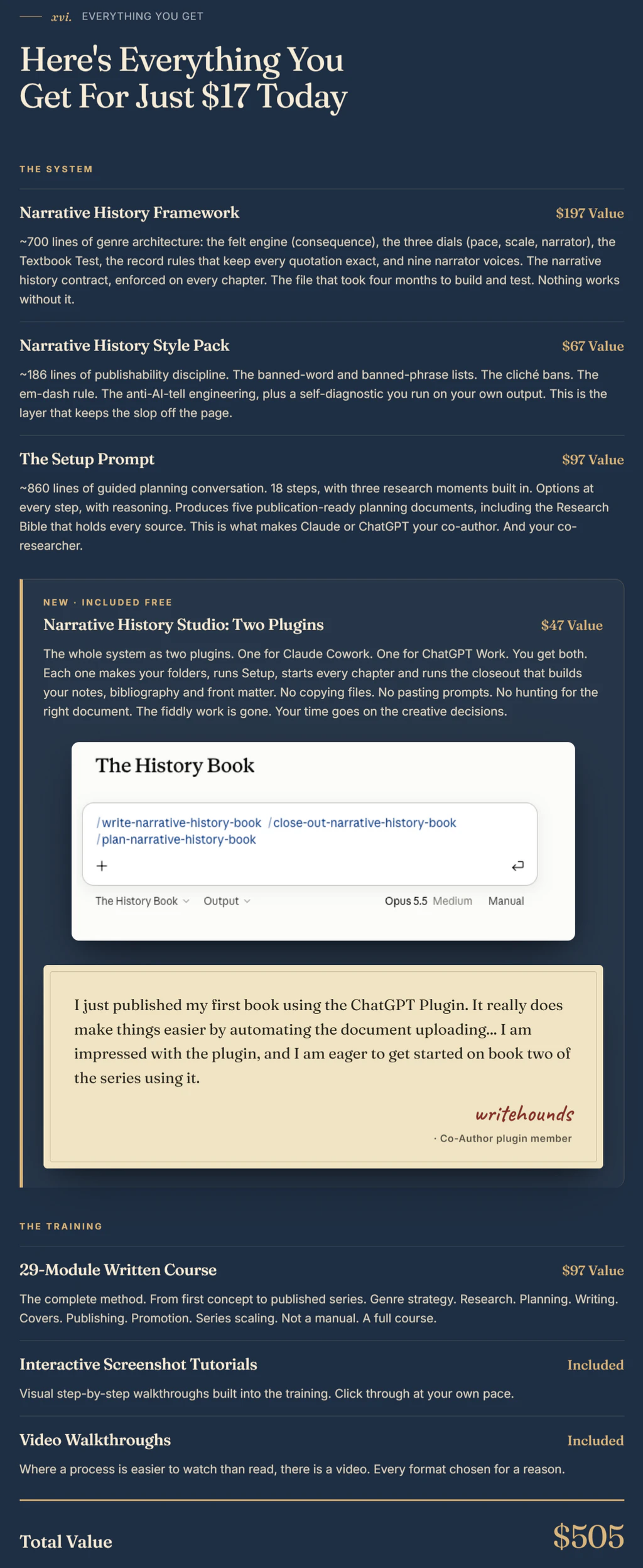
For that $17, you get every component in the table above, and the sales page adds that system updates come at no extra cost.
What else you’ll spend
Beyond the product, the seller is upfront about the running costs:
| Cost | What the sales page says |
|---|---|
| Claude or ChatGPT | Required, about $20 a month, and you only need one |
| KDP publishing | Free |
| Covers | Can be made with free AI tools, and the training shows the method |
| Promotion methods in the training | Free, costing time instead of money |
The seller adds that the $20 ChatGPT plan has very forgiving usage limits, by his own description.
Coupon and bonus
There’s no coupon code in any of the sources, and the sales page lists no separate vendor bonuses. If you spot a discount claim elsewhere, check it against the official checkout first.
Refund policy
You’re covered by a 14-day money-back guarantee. Message the seller within 14 days and you get a full refund, no questions asked. The books and planning documents you started during that window stay yours.

The OTO Details
The main sales page doesn’t price the upsells, so the figures below come from the product information, and the reference reviews list the same prices. Each OTO adds to the core system rather than replacing it, and the official FAQ says the $17 front end is enough to create a book on its own.
| Upgrade | Price | Main job |
|---|---|---|
| OTO 1: History Genre Vault | $67 one-time / $97 with Studio Plugins | Six extra history genres |
| OTO 2: History Editor | $47 one-time | Full manuscript check and Kindle-ready DOCX |
| OTO 3: Cover Creator | $67 one-time / $97 with A+ Author Toolkit | Cover prompts and Amazon A+ Content |
| OTO 4: Promo Stacker | $57 one-time | Promotion after publishing |
With the front end plus all four upgrades, you’d pay $255 at the lower tiers or $315 at the higher ones. Those totals are my own math, not an official bundle.
OTO 1: History Genre Vault
This upgrade unlocks six more genres: Christian History, Young Readers History, Narrative Prehistory & Archaeology, Ancient World, Battles & Campaigns, and Historical Biography. Each one has its own framework, style pack, setup prompt, and training, and the sales page FAQ says they match the front end’s depth and setup experience. The $97 tier adds Studio Plugins for all six genres on both Claude Cowork and ChatGPT Work. If you only want narrative history, you don’t need it.
OTO 2: History Editor
The History Editor reads the whole manuscript before you publish. It checks continuity, AI-style patterns, spelling and style, quotation accuracy, facts, dates, names, ranks, and the front and back matter, and then it assembles a clean Kindle-ready DOCX. It runs on Claude and ChatGPT and supports every Vault genre. Since the core offer doesn’t build that DOCX, Kindle publishers will likely look here first, though it doesn’t replace your own fact-check.
OTO 3: Cover Creator
The Cover Creator turns your book’s details into ready-to-use cover prompts for ChatGPT or Gemini, modeled on visual styles from successful Amazon books. The $97 tier includes the A+ Author Toolkit for Amazon A+ Content, branded graphics, and more polished book pages.
OTO 4: Promo Stacker
The Promo Stacker focuses on getting readers after launch. It covers review generation, Goodreads, reader communities, promo-site stacking, Amazon Ads, catalog connections, and email-list growth, along with genre-specific training, campaign case studies, future genre additions, and lifetime updates with no recurring fee.
A note on the KDP Club
One third-party review also lists a History KDP Club membership at $1 for the first month, then $14.99 a month, or $147 a year, with weekly live group sessions. It doesn’t appear on the sales page or in the product information, so confirm it in the funnel before counting on it.
My advice? Start with the front end, test it inside the refund window, and only then decide whether History Editor earns its place.
Pros And Cons
Pros
- $17 one-time for the complete core system
- Research comes before writing, with three research moments and a Research Bible
- Strict quotation rules, with every quote rechecked after each chapter
- Style Pack that targets AI-sounding prose, plus a self-diagnostic
- Both plugins included, for Claude Cowork and ChatGPT Work
- Back matter built automatically: characters, names, sources, chapter notes, bibliography
- Nine narrator voices, blendable, with a sample before writing starts
- Your own sources can go in, and they’re read first
- Full 29-module course with tutorials, videos, action steps, and discussion threads
- 14-day full refund, and you keep what you start
- Free system updates, according to the seller
Cons
- Accuracy isn’t guaranteed. The seller’s FAQ says outright there’s no promise of zero errors.
- Paid AI plan required, about $20 a month for Claude or ChatGPT
- Only two AI platforms for now, with other models still in testing
- Kindle-ready DOCX and full manuscript checks cost extra through History Editor
- Upgrades add up, to $255–$315 for the full set
- The launch price will rise, by an amount that isn’t stated
- Most testimonials on the page come from earlier fiction products, not this one
- Royalty and ranking figures are seller claims that I can’t verify, with no income guarantee
The Final Thought
So, is History Co-Author worth it? For the right person, I think yes. It takes the two hardest parts of narrative history, digging up trustworthy sources and turning them into prose people want to read, and gives each one its own rules, files, and checks. Then it adds plugins that handle the busywork and a course that covers everything from formatting to series building. That’s a lot of structure for $17.
Still, go in with clear eyes. No AI can guarantee historical accuracy, and the seller admits there’s no promise of zero errors, so you still read your book and check what matters before it goes live. The upgrades add up quickly, and the income screenshots belong to the seller, not to you.
If you’ve been carrying a true story around for years, though, this is a low-risk way to finally put it on paper. Grab the front end, run Setup, and use those 14 days to see whether it’s the co-author you’ve been missing.
Frequently Asked Questions
Is History Co-Author legit?
From the sources, yes, it’s a real product. It has a named creator, a clear one-time price, a detailed component list, and a 14-day money-back guarantee. Its FAQ also admits its own limits, including that accuracy can’t be guaranteed. Results, of course, depend on you.
Do I need to be a historian or a writer?
No. The seller says it was built for people without a history degree or writing experience. The AI handles the research, the framework handles structure and voice, and you make the decisions.
Do I need to pay for Claude or ChatGPT?
Yes, for one of them, at roughly $20 a month according to the sales page. You don’t need both.
Will it work with other AI models?
Not yet. It’s built for Claude and ChatGPT. The seller says other models are being tested and will be added at no extra charge once they meet his quality bar.
Is the writing historically accurate?
It’s designed to be. Quotes are copied word for word and rechecked after each chapter, and figures come from the Research Bible. However, there’s no promise of zero errors, so read and check your book before publishing.
Can I add my own sources?
Yes. You can give it letters, diaries, and records, including material from the Library of Congress, the Internet Archive, and Project Gutenberg, and it reads those first.
Does the $17 version make a Kindle-ready file?
Not automatically. Manuscript checking and Kindle-ready DOCX assembly come with the optional History Editor upgrade.
What happens if it isn’t for me?
Ask for a refund within 14 days and you get your money back in full, no questions asked. Anything you started during that time stays yours.
History Co-Author is a $17 AI system that turns Claude or ChatGPT into your co-researcher and co-author for narrative history books. It walks you from a topic through source research, planning, and writing, one chapter at a time. Along the way it builds your notes and bibliography, and it comes with plugins, a 29-module course, and a 14-day money-back guarantee.
Product Brand:
IM Wealth Builders et al.
Product Currency:
USD
Product Price:
17
Product In-Stock:
InStock History Co-Author Review: My Honest Look Before You Buy

4.2





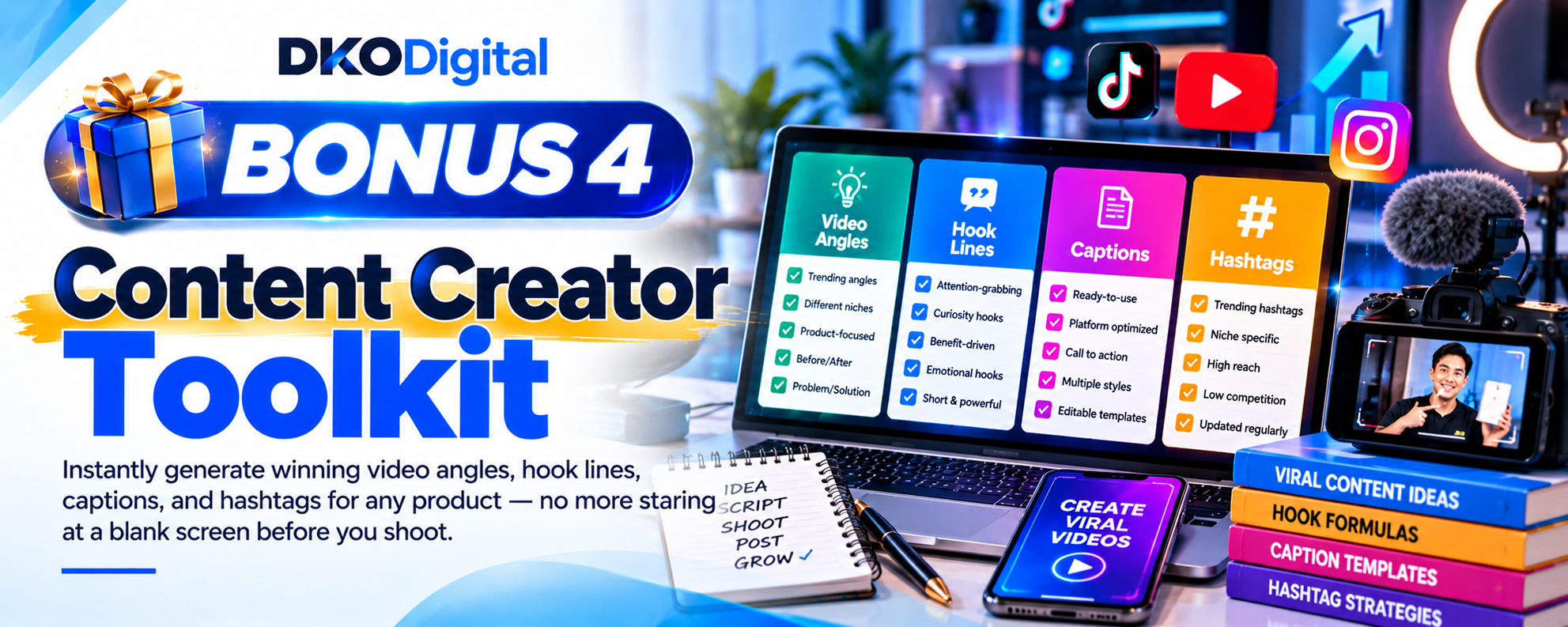
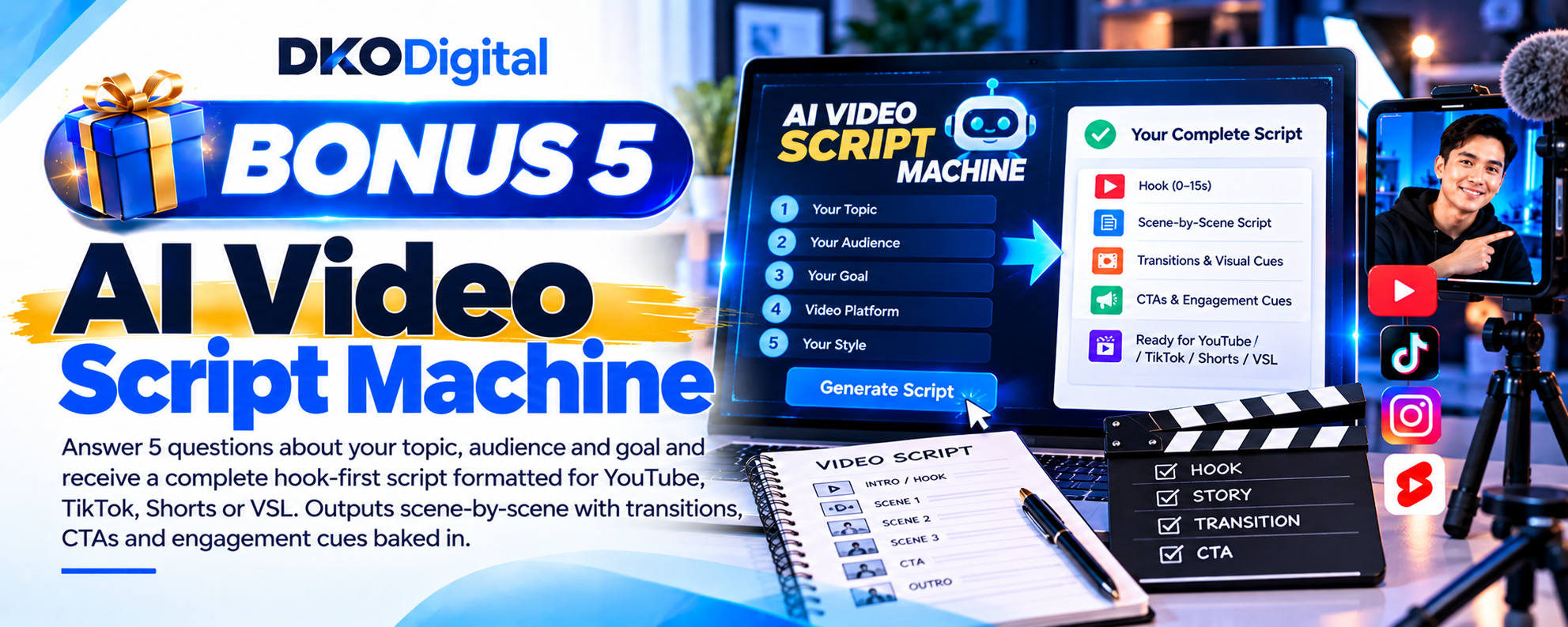

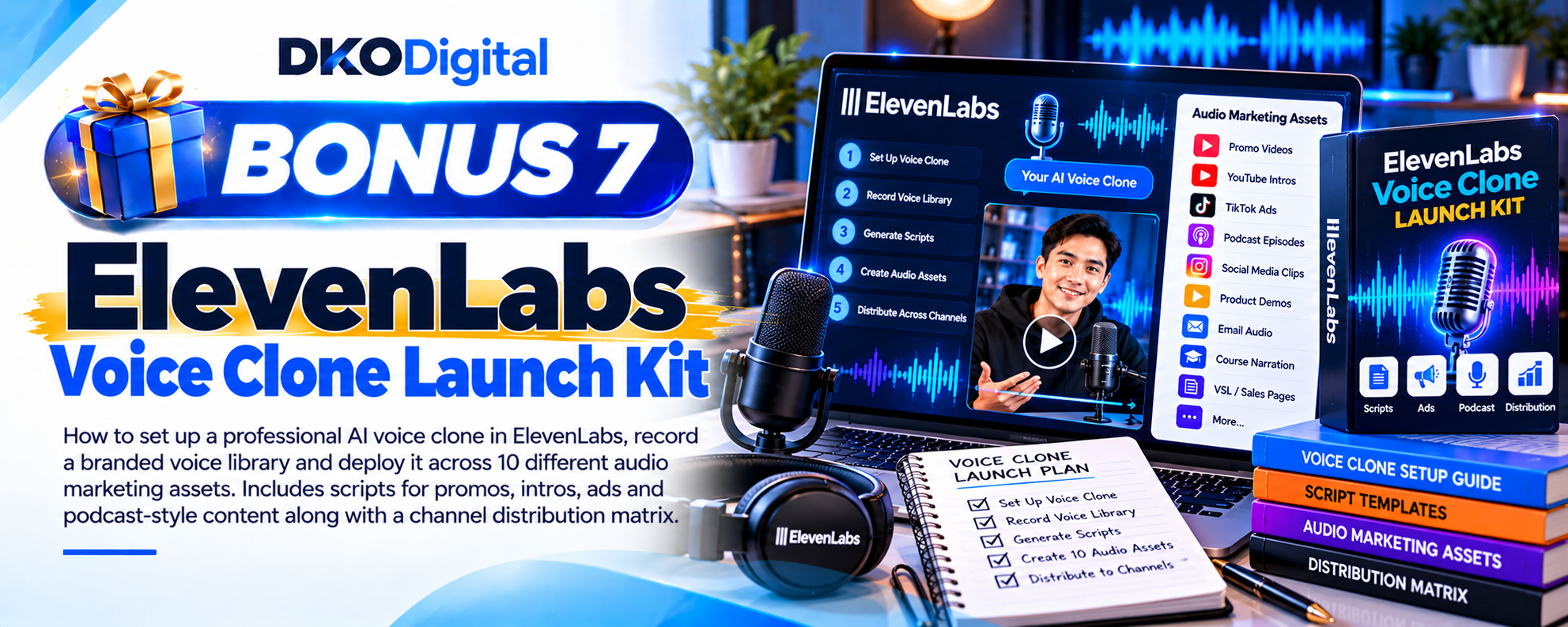





***3 STEPS TO CLAIM THIS BONUSES***
Step 1: Purchase History Co-Author through my History Co-Author Review page.
Step 2: Complete your order successfully using my affiliate link.
Step 3: That’s it! Your exclusive bonuses will be automatically delivered to you after your purchase is successfully completed.
No need to send your receipt or contact support. Simply complete your order and get instant access to your bonuses.